
We’re always interested in hearing from motivated candidates with a background in synthetic organic chemistry, polymer chemistry, biochemistry, cell biology, materials or related fields. All our projects are multi-disciplinary, offering excellent opportunities to work with National/International collaborators and world-class facilities.
Specific projects will be listed here when they are available.
Speculative enquires are welcome, email Prof. Matthew Gibson directly if you have any questions including a 2 page (MAX) CV: matt.gibson@manchester.ac.uk
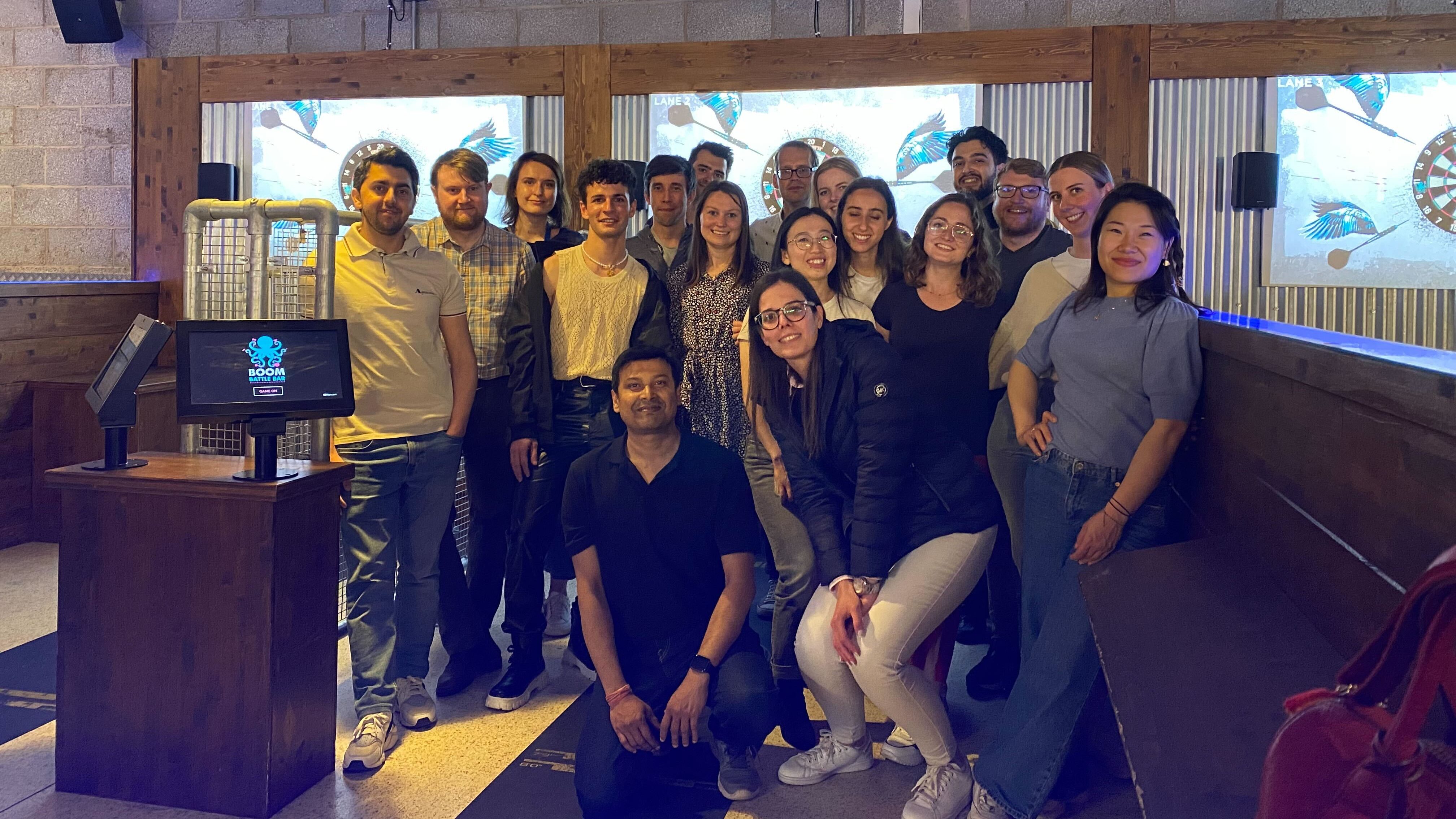
The Team. Summer 2023
Postdoctoral Vacancies .
Contact Prof Gibson for details or to send 2 page CV to enquire
Newton International Fellowships
For non-UK based individuals wanting to conduct research in our team. Annual deadline. 2024 is closed. Read full application details at this link and contact Prof Gibson as soon as possible.
Marie Curie Fellowships
Must be based outside of the UK. Highly competitive scheme and must be committed to application process. Deadline is September each yearWe can support applicants and provide world-class environment. Particularly interest in candidate interested in glycan-based materials to use our new automated glycan synthesis platform.
PhD Vacancies
Scholarship or self-funded applications should contact Professor Gibson directly
[Nationality limits. Non-UK applicants *might* not be eligible for full funding]. Self-funded students should contact MIG.
PhD 1. Sustainable recovery and remediation of metals using zero-carbon biomaterial strategies
The recovery and/or remediation of metal ions from the environment is essential for both retaining sovereign resources (such as battery components) and to mitigate environmental impact from activities such as nuclear waste processing or precious metal and electronic waste (rare earths) recovery. Increasing anthropogenic activity has led to elevated concentrations of toxic and economically valuable metals in industrial effluents, mine drainage, and even natural water bodies, posing risks to ecosystem health and human well-being. The practises currently used to extract these resources are unsustainable. For example, gold mining in many countries still involves the use of toxic cyanide, which children are exposed too; Tools for the recovery of lithium, rare earths and uranium (electronic, battery and mining wastes) are urgently needed.
This exciting, interdisciplinary PhD project will take inspiration from extremophile organisms (such as those that live in ocean hot vents, or sub-zero mountain ranges) to develop new biomaterials for the selective extraction, purification and valorisation of both precious metals, but also to recover toxic metal waste, such as that from the nuclear industry. We will both improve the recovery and replace the currently unsustainable solid-phase extraction systems, making broad impact.
PhD 2. Banking Breath: Biofabrication of Cryopreservable Lung Organoid Disease Models
Human lung organoids – miniature, lab-grown models of the human airway – are transforming how we study lung disease and test new treatments. However, their wider use remains hindered by a practical limitation: organoid models must be prepared fresh and kept alive in culture. They cannot be frozen, stored, or shipped, which makes them slow, costly, and hard to standardise across different labs and research sites.
This PhD tackles that problem directly. You will help pioneer a new way to preserve lung organoids, through the integration of advanced biomaterials, biofabrication, and cryopreservation technologies – working towards disease models that can be produced, banked, and used on demand, wherever they are needed.
Self funders or scholarship holders should contact MIG directly.

