We have a long interest in developing new tools for cryobiology: a key challenge is looking at Nature for inspiration. In our latest work, in collaboration with Tom Whale and Kew Gardens, we explore how a range of ice nucleating macromolecules from >50 pollen species nucleate ice. This appears to suggest that the ice nucleation behaviour is incidental, as there is not link between activity and the type of pollen, nor its geographical habitat. This opens up new avenues for us to discover and either use, or mimic, these materials for low temperature challenges, such as cell cryopreservation.
Category: Uncategorized
-
Two post-doctoral Vacancies in Group
We have two post doctoral vacancies opening in our team. These are both 2 year contracts, working in polymers/nanomaterials for biomedical applications, but with a lot of flexibility. Find details here. https://gibsongroupresearch.com/join-us/
-
Publication of Transwell Monolayers published
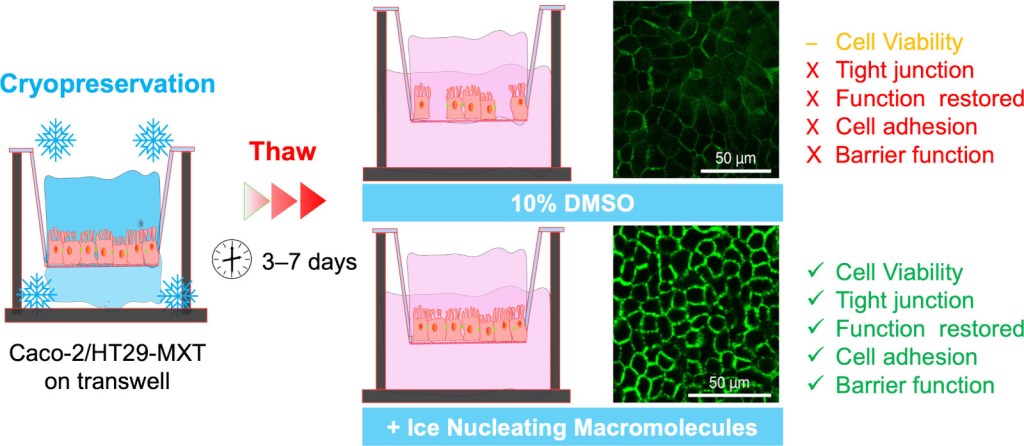
We have been developing the field of ‘chemical cryobiology’, to develop and discover new tools to allow the cryopreservation of biologics. We have a particular interest in cryopreserving complex cellular models, which can be used as alternatives to animal testing but are not available ‘off the shelf’, relying on complex cell culture. In this latest work, published in ACS Applied Materials and Interfaces, we show we can cryopreserve Caco-2 monolayers. Caco-2 cells are an important model for epithelial barriers (e.g intestinal) and important in toxicology. However, current cryopreservation methods recover the cells, but NOT the tight-functions between cells which are crucial for their barrier function. To solve this problem we used chemically-induced ice nucleation to prevent supercooling. Using this, our frozen caco-2 monolayers re-establish their barrier function <7 days post thaw, compared to >20 days if you were to use conventionally cryopreserved cells. We feel this technology will help accelerate the use of more complex cell models. Read the paper here:
-
Funding for automatic polysaccharide synthesis
Thanks to the Henry Royce Institute (UK’s national materials institute, with its Hub Building based in Manchester) we have been provided with funding to established an automated polysaccharide discovery platform at the MIB. This is based on the Glyconeer platform, for solid phase elongation of glycan-chains. We will use this to discover future sustainable (bio)materials for a range of biotechnological and materials science areas. The funding also includes in-line anlaysis capability (NMR) and purification capabilities. This will be available for complex glycan synthesis for glycobiology research too.
-
Hosting Society for Low Temperature Biology Conference
We are proud to announce that we will be hosting the 60th Anniversary Meeting of the Society for Low Temperature Biology conference here in Manchester. The event will be the 11-13th September in the Manchester Institute of Biotechnology. The registration fee is just £100 for members, including refreshments and conference dinner. Submit abstracts and register here! https://www.sltb.info/sltb-2024
-
PhD Vacancies for 2024
We have a range of PhD vacancies to join our team this year. Please scroll through the webpage to find details. These will span polymer and carbohydrate chemistry to address issues in biotechnology, sustainability and health. We offer brand new laboratories in a world-class enviroment, based near the heart of a vibrant international city.
-
Innovation in formulation Award
On 23rd January, Prof Gibson was awarded the SCI Innovation in Formulation Prize, for our work developing macromolecular (polymer) cryoprotectant formulations, which underpin the Cryoshield(TM) technology enabling assay_ready cell products. This was joint with CryoLogyx (who have commercialised the technology) and recognises our collaboration with Tom Whale, and hard work from many group members. Still many hashtag#cryobiology Despite the success of this, there remain many cryobiology and biobanking challenges to be solved, which need bottom up science to drive innovation – and we are trying!
-
Polymers to cryopreserve bacteriophage is published
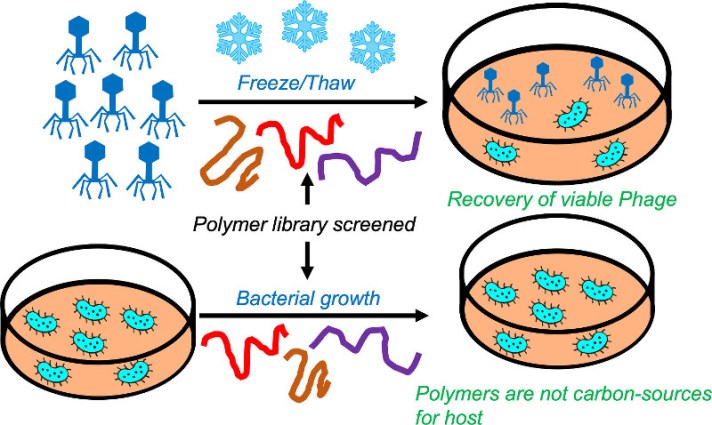
We have a large programme in chemical cryobiology – new chemical tools to help us store and transport biological material, protecting them from cold damage during cryopreservation. Our latest work, in collaboration with Cytiva and Dr Sagona (Warwick) asks the question of ‘what is needed for a polymer to be a good cryoprotectant for bacteriophage’? Phage are emerging antimicrobial agents, and key components of complex microbiome communities, but there has been little research in how to store them. We show in this work, that almost any hydrophilic polymer protects a range of phage during freezing at just 10 mg/mL, which is lower than convention glycerol-mediated freezing. These observations will help us design new protocals and tools to bank viruses. Read the paper here
-
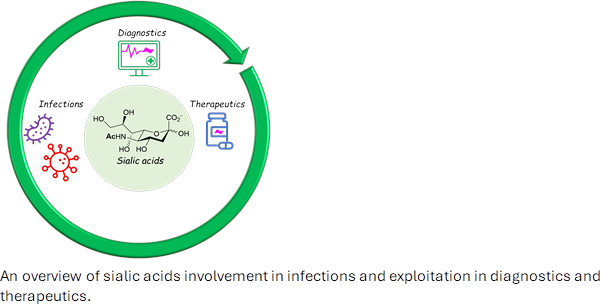
The role of Sialic acids in infection, and application in detection/therapy published
We have a large interest in glycobiology, and in particular how we can deploy glyco-tools in biosensing and diagnostics. Our latest review article, written in collaboration with our long-term collaborators Iceni Glycoscience and Prof Field, discusses the role of sialic acids (found on mammalian cell surface) as anchors for pathogens and the potential to use our understanding of these interactions in biomedical applications. Read the paper here