We have up to 6 PhD vacancies to join our multidisciplinary, supportive, team. Projects spam important areas from new degradable polymer materials, strategies to store/transport cells for therapy, new diagnostics, to tissue models to replace animal testing. Navigate to ‘how to join us’ to see vacancies, and how to work in amazing new facilities in a vibrant city.
Category: Uncategorized
-
Using ROCK inhibitors to improve cryopreservation outcomes
We are applying medicinal chemistry (Chemical CryoBiology) approaches to improve the storage of cell based therapies. In the latest work, they apply ROCK (Rho-associated protein kinases) inhibitors to target pathways which lead to cell death after thawing cryopreserved t-cells. This approach is exciting as there is no change required to the cryoprotectants nor the handing process, but just an extra component in the thawing medium, giving up to 20 % more cells: in the context of a cell-based therapy this would be a large increase.
Read the paper here
Post-thaw application of ROCK-inhibitors increases cryopreserved T-cell yield
-
Prof Gibson Interviewed for Technology Networks
Prof Gibson was interviewed regarding current challenges, and opportunities, in cryopreservation research. Read the article here
-
Lab Relocation to Manchester!
Later in 2023 our research programme is moving to the University of Manchester, and Matt is taking up a new Chair in Sustainable Biomaterials. The team will be based in brand new laboratories in the Department of Chemistry and also the Manchester Institute of Biotechnology. More news will be coming soon!
-
Amino Acid Improves T-Cell Cryopreservation
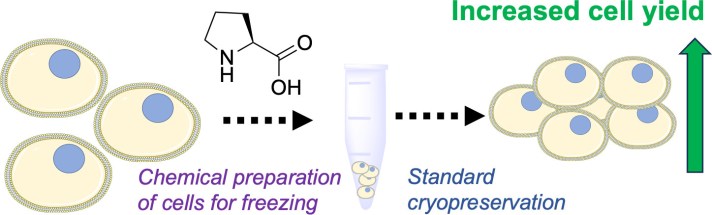
Advanced cell-based therapies are often delivered to the patient frozen. Hence, any technology which increases the number of recovered, viable, cells post-thaw may improve clinical outcomes or allow more treatments per donation. We have previously shown strategies to protect cells during freezing. In this latest work, in collaboration with Cytiva, the team show that incubating a model t-cell line with proline before cryopreservation leads to increased post-thaw cell yields. All proline is removed before cryopreservation so the actual freezing and thawing processes are unchanged. It was shown that proline limits cell proliferation, which might be contributing to its mode of action similar to ‘metabolic pre-conditioning’ which has been shown before.
Read the paper here
Proline Pre-Conditioning of Jurkat Cells Improves Recovery After Cryopreservation
-
Perfect Glyco-Clusters Published in ACS AMI!!
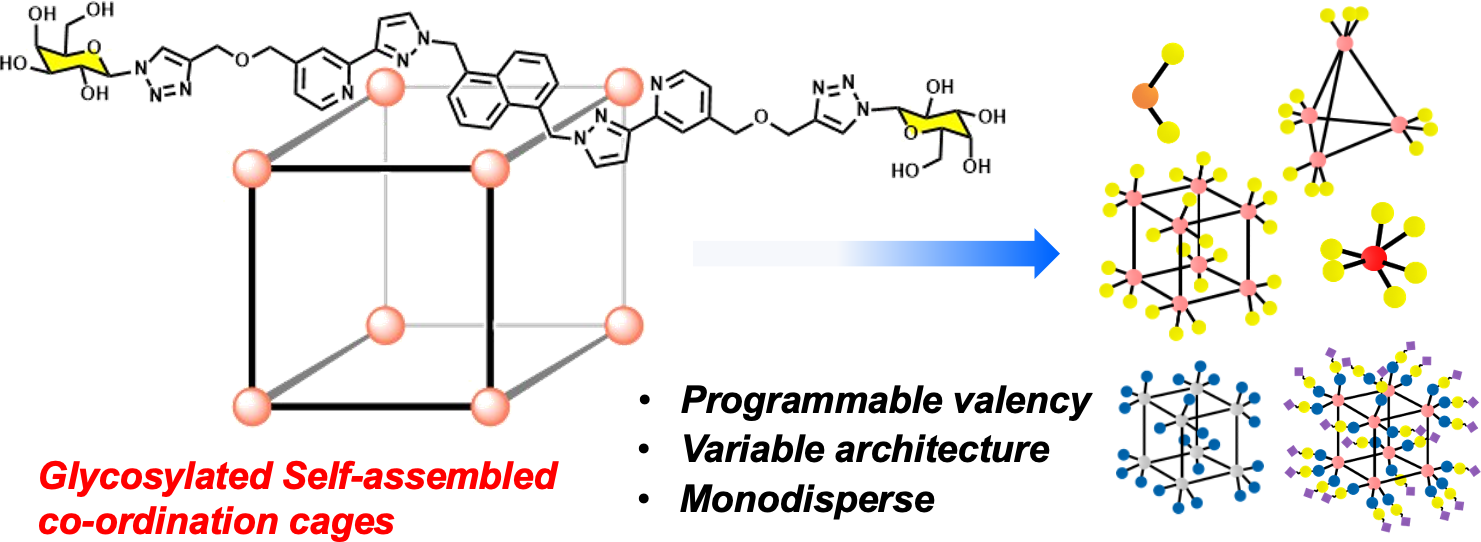
We have a major interest in developing synthetic mimics of the glycocalyx (sugars on outside of all our cells) and glycoproteins. A key challenge is that most mimics are heterogeneous – e.g. polymers and nanoparticles have dispersity: hence you ‘cannot make the same material twice’ and you dont know exactly the what the structure will be, before you make it. Working with the Ward Group, Melissa and Callum developed a self-assembly route, using metal-organic cages, allowing us to ‘program’ the synthesis of perfect, monodisperse and reproducible glycoclusters. This was a huge synthetic/analytical challenge but we now have the tools to make precision glycomaterials, which would be identical anywhere in the world. Read the paper here
-
PhD Vacancies
We have 3 PhD vacancies to start later in 2023. These span both synthesis and cell culture. Go to the ‘join us’ page for more details.
-
Cryopreservation of Spheroids Published in ChemCommun
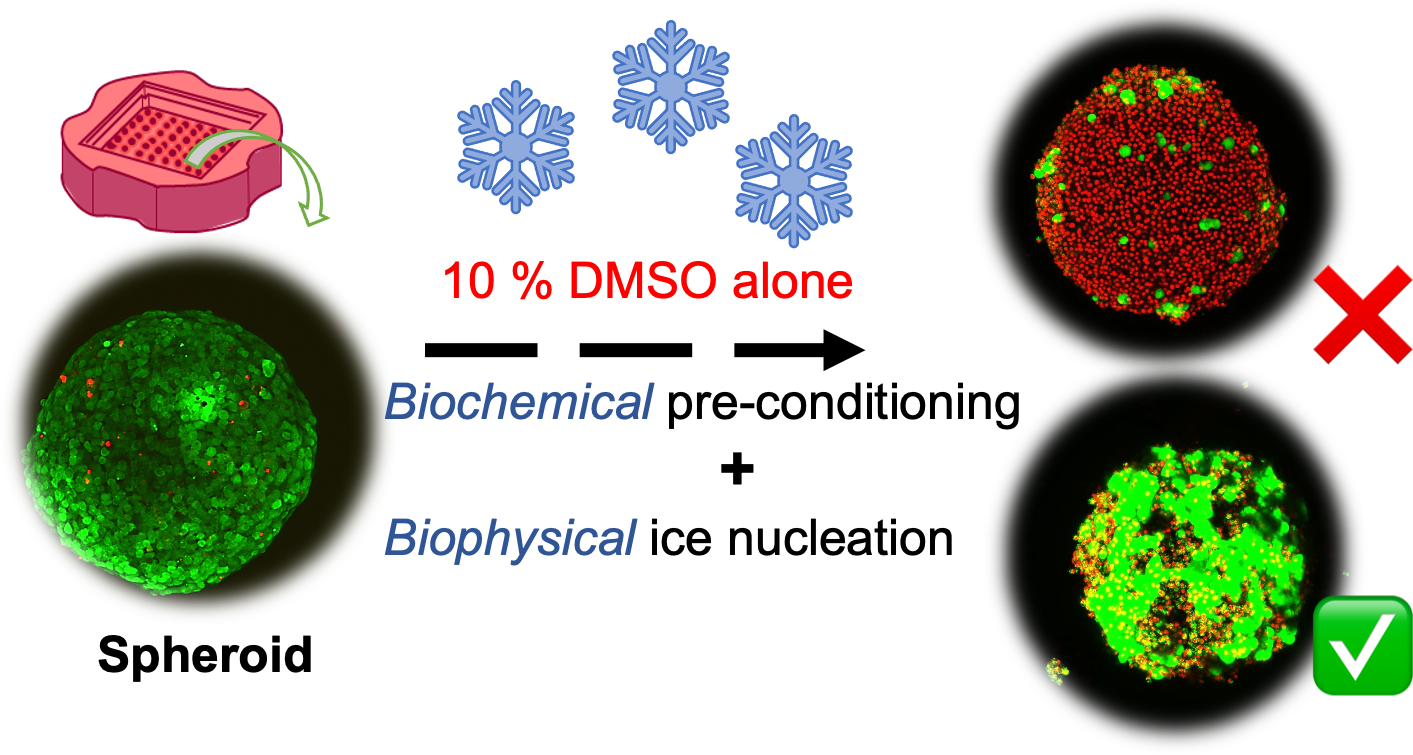
Our latest work, developing technologies to allow us to bank complex 3D tissue models, with a long term aim of them being ‘ready to use’ and ‘off the shelf’ to help researchers replace animal models, has been published. In this we prepare the cells for freezing by proline pre-conditioning and use a unique chemical ice nucleator to ensure we get the ice outside the cells, but not inside. Read it here.